
Hiring Framework
Talent Acquisition Technologies in 2022: The Hiringmaster Guide

S. Connie
Published on 4th November, 2022

5 min
Talent acquisition has never been simple. But, in 2022, the difficulty has reached an all-time high. According to Bullhorn, recruiters globally have cited talent shortages, hiring freezes, Covid-19s effect on work norms, increased competition and economic uncertainty as the causes.
While sharing our difficulties is interesting, we’re here to talk about the solutions. In response to a fascinating report from Gartner, this article will take a look at the latest in talent acquisition technologies in 2022, to uncover what you need to know to successfully tackle the challenges your industry faces.
This article will cover:
- The evolution of talent acquisition
- The importance of CRM
- What to look for in talent acquisition technology in 2022
- The takeaway: what should you prioritise?
The evolution of talent acquisition
You can’t know where you need to go without critically assessing where you are, and how you got there. So, let’s start by taking a look back. Historically, requisition-to-hire processes relied on applicant tracking systems (ATS) to meet their core needs of:
- Tracking
- Posting
- Automation
This saw the need for:
- Recruitment marketing
- Candidate Relationship Monitoring (CRM)
- Onboarding
- Talent marketplaces
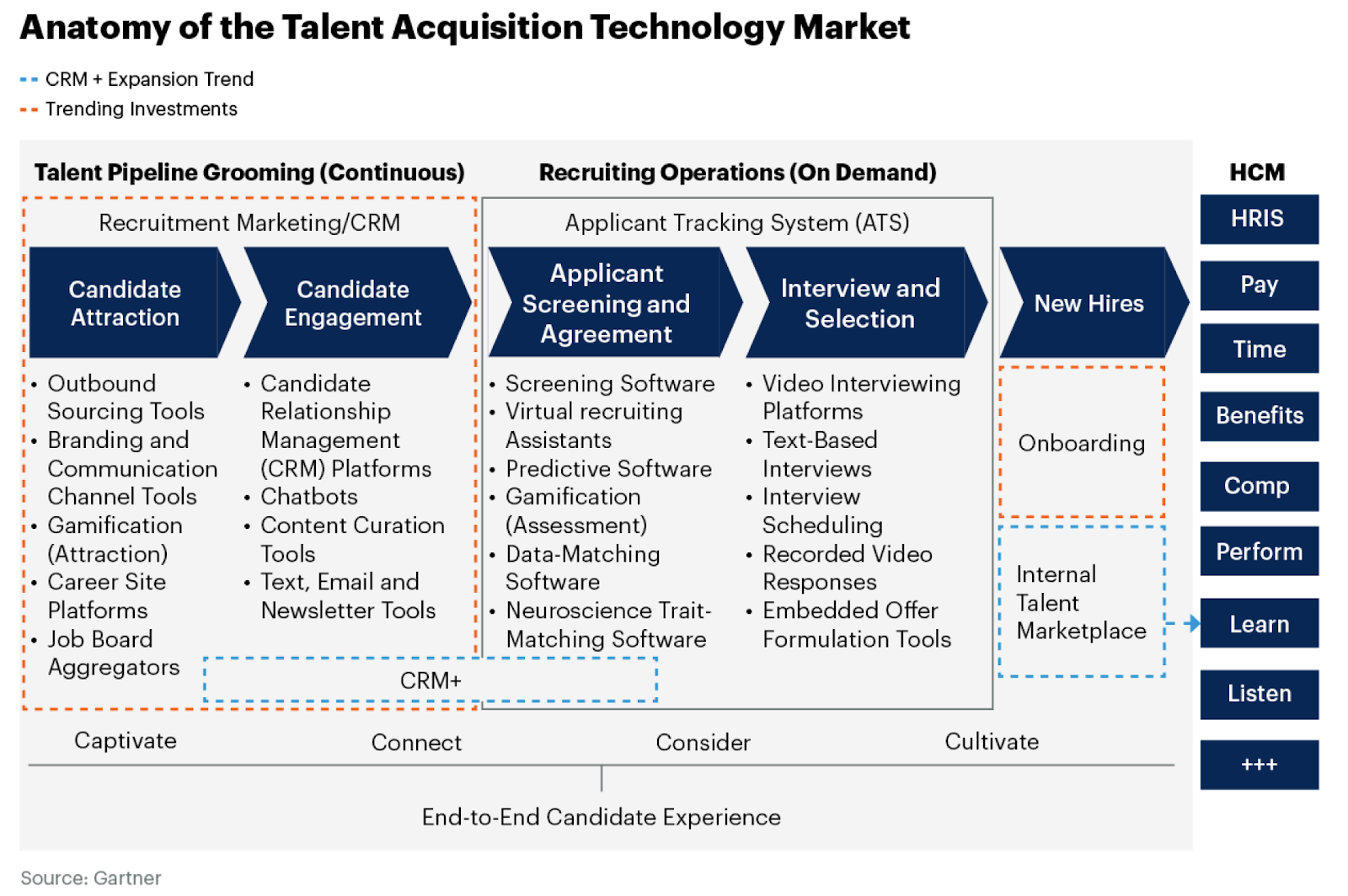
But with all these new functions, new issues arose - mainly around managing the many different arms of the process. Is this all sounding familiar?
Today, the most pressing needs for the majority of organisations for TA technology are those that provide:
- Passive candidate sourcing
- AI-enabled candidate skills matching
- Interview-related automation
- Great overall candidate experience
The importance of CRM
What’s interesting about the evolution and demands of TA technology, is how it stemmed from the need for effective candidate relationship monitoring. It’s key to unlocking your recruitment potential. The Gartner report says:
“The collective purpose of [candidate attraction and engagement] capabilities is to continuously source, and connect with, both passive and active candidates as part of strategically relevant talent pools. This is so that when job requisitions are posted downstream, there’s a ready pool of talent from which to curate, and you’re not effectively starting from scratch. As competition for talent has become more intense, investment in these categories (particularly CRM) has shifted from a wish list capability for the TA function to a must-have commodity.”
In short, with the right TA technology and CRM, you can be proactive in your process, not reactive. A trait that’s essential to compete in the current market.
What to look for in talent acquisition technology in 2022
So, as TA technology has adapted to meet these needs, the pool of options has grown wider. Sifting through the options and finding the one that’s right for you is time-consuming and confusing. So, let’s make things clear. Gartner identified four main criteria that should be considered when looking for talent acquisition.

Boost productivity while saving time and money
4 fundamental principles to eliminate inefficiencies from the recruitment process.
1. Candidate experience
This takes the number 1 spot for a reason. Candidate experience is now a key metric for any recruitment organization. Bullhorn reported that 46% of recruiters believe talent shortage is the top challenge faced in 2022. Gartner saw similar demands, as shown below:
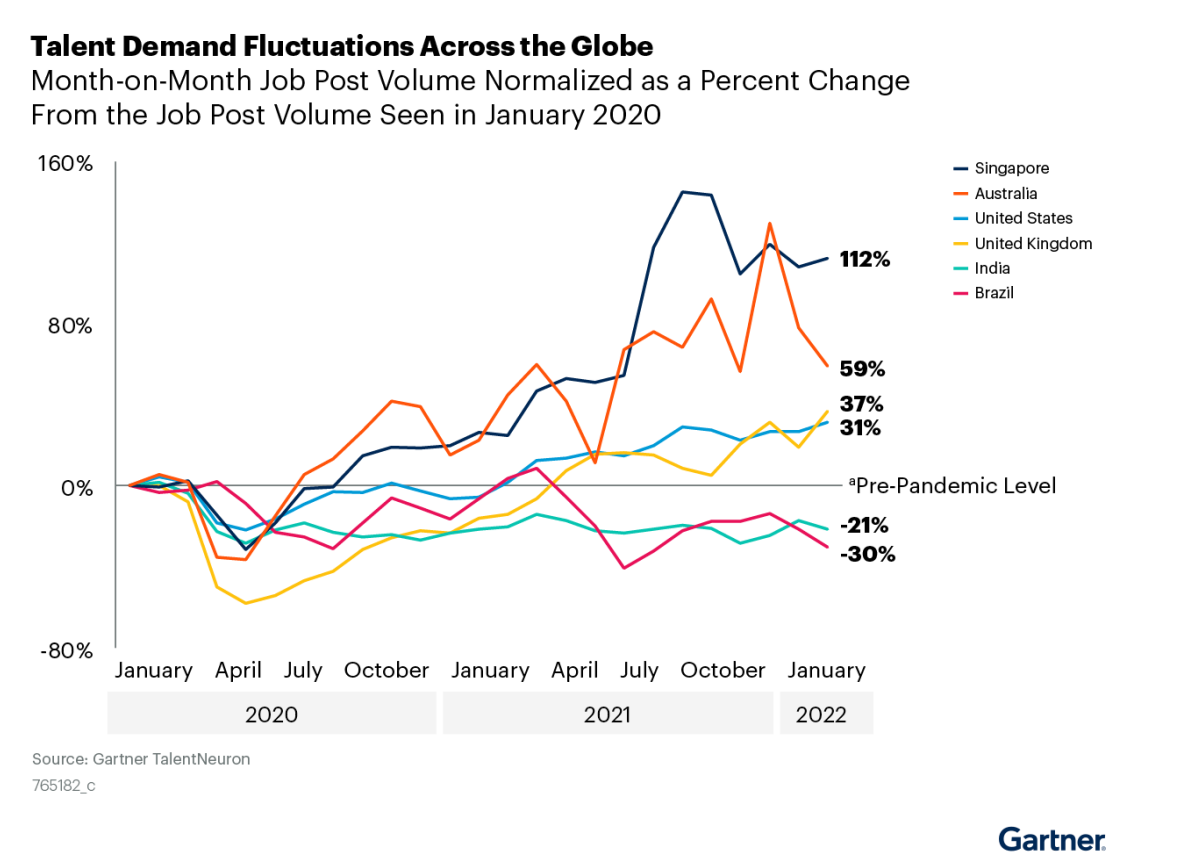
So, to attract those valuable candidates, you need to make sure their experience from discovery through to onboarding is:
- Well communicated
- Supportive and informative
- Efficient and time thrifty
2. Process efficiency
Efficiency is key to any successful recruitment process. Streamlining your projects leads to more effective team working, better candidate experience and quicker lead times. You need to find technology that allows you to do this. We recommend you seek:
- Project management capabilities (quickly assign and check in on activity)
- In-software candidate communications (so you can avoid jumping between platforms)
Having the right tech and relevant innovations behind you can make the recruitment role so much easier to handle. For example, having embedded AI and Machine Learning for automation and personalisation go a long way toward making the previous 2 components possible.
4.Strategic alignment
TA technologies are no longer standalone purchases whose work ends at offer-accept. For in-house recruitment teams, they need to be evaluated alongside technologies and systems for:
- Skills advancement
- Career development
- Internal mobility
For recruitment companies, the capability to record KPIs and track the results via technology is a game-changing addition that will help innovate and improve processes no end.
The Takeaway: What should you prioritise?
These four points that your technology should prioritise when optimising your TA. But what about you, as the leader? Here’s what Gartner recommends: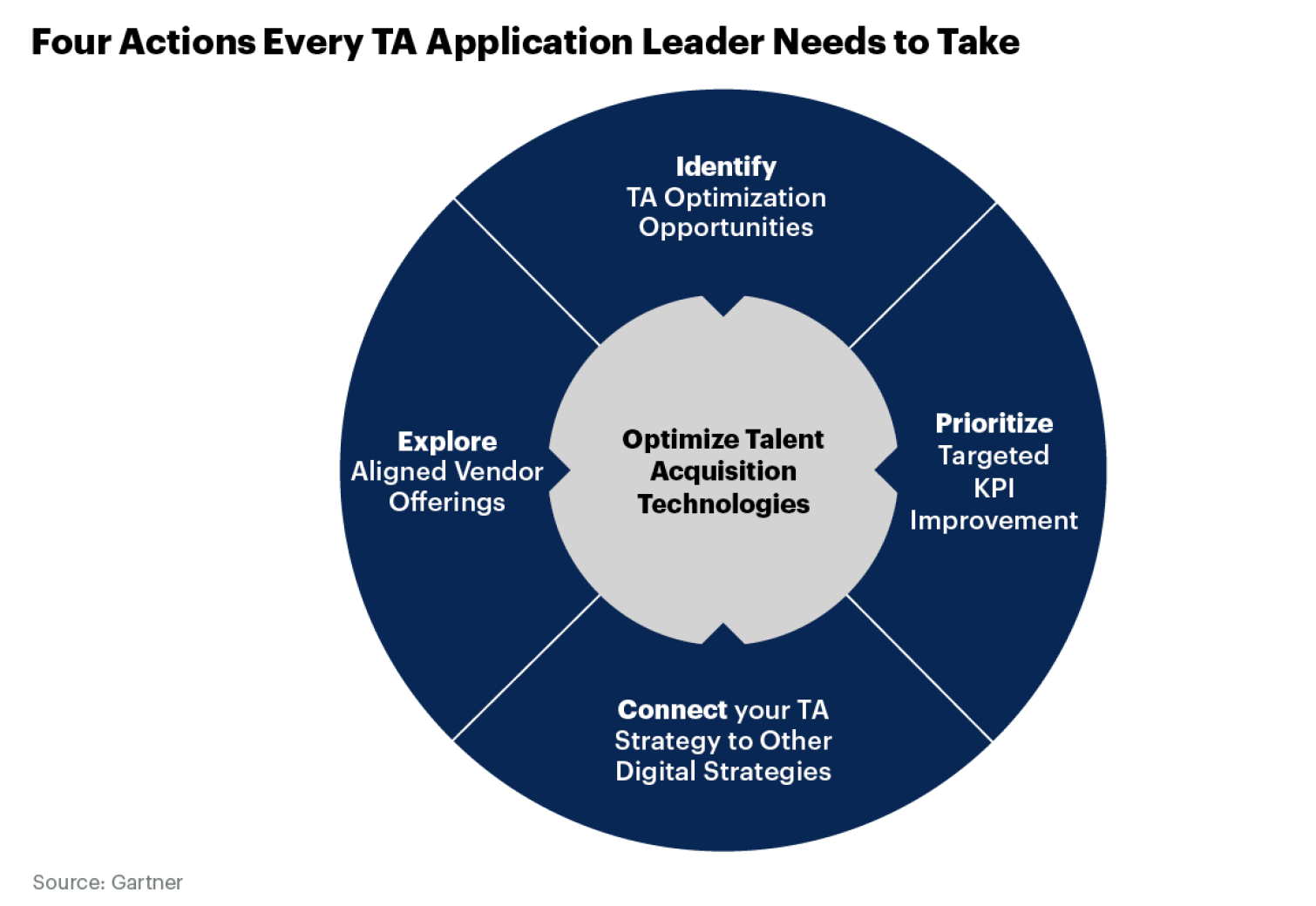
- “Identify untapped areas of recruiting automation opportunity by mapping your existing TA technologies against the anatomy of the TA market.”
- “Prioritise recruitment process automation opportunities by meeting with representatives of your recruiting function to discuss current-day process flow against targeted change/improvement measures and KPIs.”
- “Contrast and compare vendor product options in prioritised opportunity areas by leveraging the named representative vendors information [in the Gartner report] as a starting point.”
- "Evaluate how your TA technology objectives connect to the overall skill and talent supply objectives of your organisation that reach beyond the TA function (into L&D, HR Ops and HRBPs, for example).”
How Hiringmaster can help transform your processes?
Feeling bogged down by outdated processes? There’s nothing more frustrating than when your productivity is hindered by your technology. What if we told you there was a better way? We’re here to make your processes easy to understand, manage and update. Our intuitive, easy-to-use software is here to transform your recruitment management processes, so you streamline your pipeline and get your job done efficiently.Get started for free, today
Contents
- The evolution of talent acquisition
- The importance of CRM
- What to look for in talent acquisition technology in 2022
- The Takeaway: What should you prioritise?
- How Hiringmaster can help transform your processes?

